 Mahamudul Kabir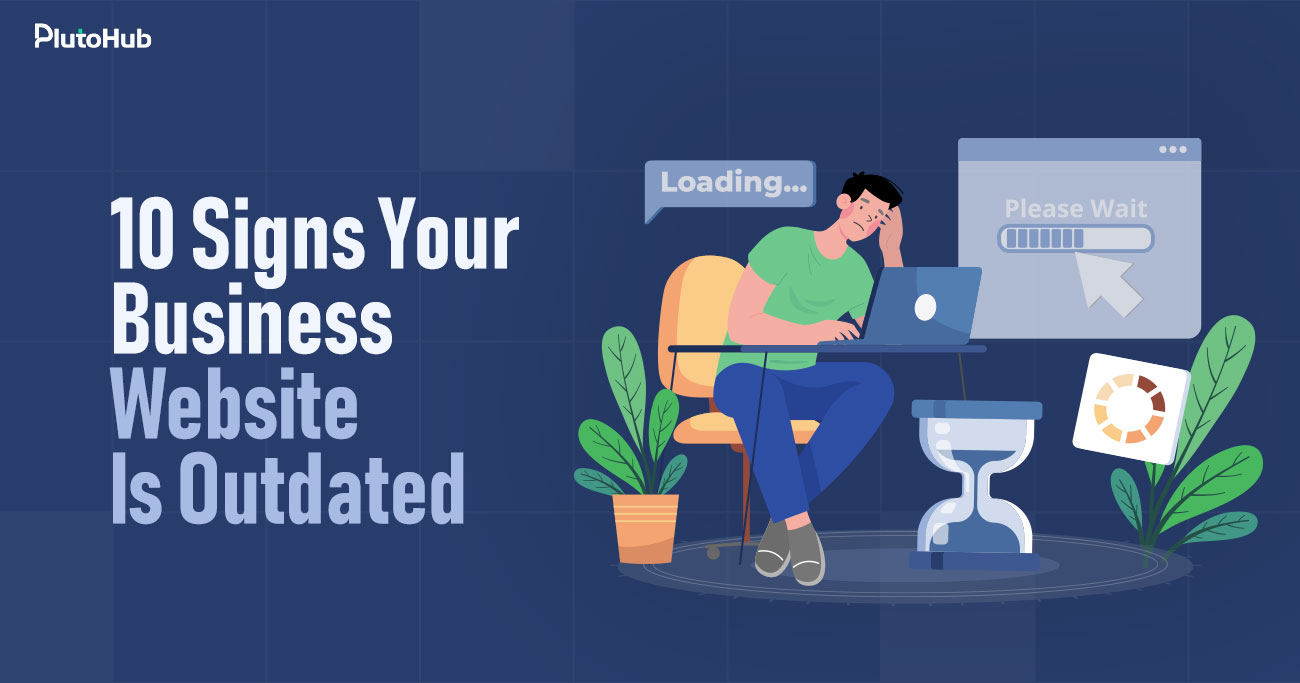
Your website is often the first place people learn about your business. Before they call you or send a message, they usually check your site to see if you look trustworthy and professional. If the website feels old or hard to use, visitors may leave without telling you why. This can quietly hurt your brand and cost you potential customers.
Many business owners don’t realize their site is outdated because it still works, but design trends, user habits, and technology change quickly. In this blog, we’ll go over 10 simple signs that your business website may be outdated and explain why fixing them can make a real difference for your growth and online presence.
An outdated website is a site that no longer meets current user expectations, design standards, or technical requirements. It may load slowly, look old fashioned, or feel difficult to use on modern devices like smartphones and tablets. Content on an outdated website is often no longer accurate, relevant, or helpful, which can reduce trust in the business.
It may also lack basic features such as clear navigation, strong security, or up to date contact information. Even if the website is still online and functioning, it can silently hurt credibility, user experience, and search visibility. In today’s digital world, an outdated website can make a business appear inactive, unprofessional, or behind its competitors, which can lead to missed opportunities and lost customers.
An outdated website can quietly push visitors away. These common issues often go unnoticed by business owners but strongly affect trust, usability, and overall online performance.
Today, most people visit websites from their phones. If your website does not adjust properly to smaller screens, users will struggle to read text, click buttons, or navigate pages. This creates frustration and often leads visitors to leave quickly. A non mobile friendly website may have tiny fonts, overlapping elements, or content that requires constant zooming. Search engines also favor mobile optimized websites, so poor mobile usability can lower your search rankings. Even if your desktop version looks fine, ignoring mobile users means ignoring a large portion of your audience. A modern business website should be responsive and provide a smooth experience on phones, tablets, and desktops alike.
Slow loading pages are one of the clearest signs of an outdated website. When a site takes too long to load, users lose patience and leave, often within seconds. Broken layouts, images that do not load, or features that fail on certain browsers also damage credibility. These problems are usually caused by outdated code, unoptimized images, or old plugins. A slow or unstable website can also hurt your search engine visibility and conversion rates. Modern users expect fast, reliable performance across all devices. If your website struggles to keep up, it sends the message that your business may not be keeping up either.
Visual design plays a big role in how people judge your business. An outdated website often uses old fonts, poor color choices, low quality images, or cluttered layouts. Inconsistent design elements from page to page can make the site feel unprofessional and confusing. Even if your content is good, an old looking design can reduce trust and make visitors question your credibility. Modern websites focus on clean layouts, readable text, and consistent branding. Updating the visual design does not mean following every trend, but it does mean creating a fresh, clear, and professional look that reflects your current business values.
If visitors cannot easily find what they are looking for, they will leave. An outdated website often has too many menu items, unclear labels, or poorly organized pages. Important information may be buried under multiple clicks, making the experience frustrating. Confusing navigation increases bounce rates and reduces engagement. A modern website keeps navigation simple and user focused, guiding visitors smoothly to key pages like services, contact, or pricing. Clear structure helps users feel comfortable and in control. When navigation feels messy or overwhelming, it signals that the website was built without today’s user experience standards in mind.
Content is one of the main reasons people visit a website, but outdated or poorly structured content can quickly turn them away. When information is old, inaccurate, or no longer useful, visitors may lose trust in your business. Large blocks of text without headings, bullet points, or spacing make content difficult to scan, especially for users who are quickly looking for answers. If your messaging does not clearly address your audience’s current needs, it can feel disconnected or irrelevant. Modern websites focus on clear, updated content that is easy to read, easy to understand, and aligned with what visitors are actually searching for today.
A website should guide visitors toward taking action, but many outdated sites fail to do this well. Weak or missing calls to action leave users unsure of what to do next. Without clear prompts such as contact us, book now, or request a quote, visitors may leave without engaging further. Sometimes calls to action exist but are hidden, unclear, or written in a way that does not motivate users. Effective websites use simple, direct language and place calls to action where they are easy to see. Strong calls to action help turn visitors into leads, customers, or subscribers.
If making small changes to your website feels stressful or requires technical help every time, it may be outdated. Older websites often rely on complex systems, outdated themes, or unsupported plugins that are hard to manage. This can lead to delayed updates, broken features, or security risks. When a site is difficult to maintain, content often stays outdated longer than it should. A modern website should be easy to update, flexible, and secure, allowing you to make changes quickly without disrupting functionality. Easy maintenance saves time and helps keep your site fresh and reliable.
A steady drop in search traffic is a strong sign that a website is falling behind. Search engines regularly update their algorithms, and outdated websites often fail to meet new standards. Poor page speed, lack of mobile optimization, weak content structure, and outdated SEO practices can all contribute to declining rankings. Over time, competitors with newer, better optimized websites may outrank you. Modern SEO requires clean code, quality content, and a strong user experience. If your website is no longer performing well in search results, it may need updates to stay visible and competitive online.
A website should be usable by everyone, but outdated websites often overlook accessibility and basic usability. Poor contrast, small text, unclear buttons, or forms that are hard to complete can make the site frustrating for many users. People using screen readers or keyboard navigation may struggle if accessibility standards are not followed. Even for average users, confusing layouts and inconsistent interactions can reduce engagement. When visitors find a website difficult to use, they are less likely to stay, explore, or take action. A modern website prioritizes accessibility and usability so all users can navigate content easily, understand information clearly, and interact with confidence.
Your website should actively support your business goals, not just exist online. If it no longer helps generate leads, sales, or inquiries, it may be outdated. Many older websites were built without clear objectives or have not evolved as the business grew. The messaging may no longer match your services, target audience, or brand direction. Features like lead forms, booking tools, or analytics may be missing or ineffective. A modern website aligns design, content, and functionality with clear business goals. When your website supports what you are trying to achieve, it becomes a powerful tool for growth rather than a digital placeholder.
Deciding between a website redesign or a refresh can be confusing. Both improve your site, but they serve different goals depending on performance issues, business growth, and long term plans.
A website refresh focuses on improving what already exists without changing the core structure. It usually includes visual updates like colors, fonts, images, and layout adjustments. Content may be rewritten to sound clearer or more modern, and calls to action might be improved. A refresh works well when your website still functions properly but feels outdated or slightly off brand. It is faster, less expensive, and less disruptive than a full redesign. Businesses often choose a refresh when their goals have not changed but their site needs to look more professional and current.
A website redesign is a complete rebuild of the site from the ground up. This includes structure, navigation, design, content, and sometimes the platform itself. Redesigns are needed when a website no longer supports business goals, performs poorly, or feels difficult to use. It often involves rethinking user journeys, improving speed, fixing technical issues, and aligning the site with updated branding. A redesign takes more time and planning, but it allows for deeper improvements that a refresh cannot solve. This option is better for growing businesses or those changing direction.
A refresh is the right choice when your website still converts visitors and works well technically. If users can easily find information, pages load fast, and mobile experience is smooth, a full redesign may not be necessary. Refreshes are ideal when branding has slightly evolved or content needs polishing. They are also useful when budget or time is limited. If your analytics show steady performance and feedback is mostly positive, a refresh can extend your website’s lifespan without major changes.
A redesign is the better choice when problems go deeper than appearance. If traffic is dropping, conversions are low, or users struggle to navigate your site, refreshing visuals will not fix the core issues. Redesigns are also important when your business has grown, added services, or shifted its target audience. Older platforms, security risks, and poor SEO performance are strong signs a redesign is needed. While it requires more investment, a redesign can unlock new growth and long term stability.
A strategic website redesign goes beyond visual changes. It fixes deeper issues that affect performance, usability, and growth, helping your website work as a reliable tool for achieving real business goals.
A strategic redesign ensures your website works smoothly on all devices, especially mobile phones. Layouts are rebuilt to adapt naturally to different screen sizes, making text readable and navigation simple. Buttons, forms, and images are optimized for touch use. This improves user satisfaction and reduces bounce rates. With mobile usage continuing to grow, a responsive design is no longer optional. A redesign makes sure every visitor gets a consistent, comfortable experience, regardless of the device they use.
Slow loading pages and broken elements are often caused by outdated code and poor structure. A strategic redesign cleans up unnecessary scripts, optimizes images, and uses modern development practices. This results in faster load times and better stability across browsers. Improved performance not only keeps users engaged but also supports better search engine rankings. Speed and reliability are core outcomes of a well planned redesign.
Confusing navigation frustrates users and blocks conversions. A redesign focuses on how visitors move through your website. Menus are simplified, content is reorganized, and key actions are made easier to find. This creates a clear path from entry to conversion. When users understand where to go and what to do next, engagement increases naturally. Clear structure is one of the biggest advantages of a strategic redesign.
Over time, content often becomes scattered or outdated. A redesign allows you to revisit messaging and align it with current goals. Services, value propositions, and calls to action are refined to speak directly to your target audience. Content becomes easier to scan and more persuasive. This alignment helps your website actively support lead generation, sales, or inquiries instead of simply providing information.
Search engine standards change frequently, and older websites struggle to keep up. A strategic redesign improves site structure, page speed, mobile usability, and content clarity, all of which support SEO. Clean code and better organization help search engines understand your site more easily. Over time, this leads to stronger visibility and more consistent traffic. A redesign sets the foundation for long term growth rather than short term fixes.
Plutohub helps businesses turn outdated websites into modern, high-performing digital experiences. The team focuses on more than just visual upgrades by improving usability, speed, and overall structure. Plutohub designs websites that are mobile friendly, easy to navigate, and built to convert visitors into leads. Every project starts with understanding business goals, target audiences, and current website problems.
From cleaner layouts and clearer messaging to better calls to action and SEO-ready structure, each element is carefully planned. Plutohub also ensures websites are easy to update and maintain, so businesses stay flexible as they grow. With a strong focus on strategy, design, and performance, Plutohub helps brands build websites that look modern, feel intuitive, and support long term business growth in a competitive digital space.
If your website looks outdated but still works well, a refresh may be enough. If users struggle with navigation, speed, mobile experience, or conversions, a redesign is usually the better option. Performance issues are key signals.
A full website redesign typically takes four to ten weeks, depending on size, complexity, and content readiness. Strategy, design, development, and testing all play important roles in the timeline.
If done strategically, a redesign can improve SEO. Proper redirects, optimized structure, faster speed, and better content help protect rankings and often lead to long term growth rather than traffic loss.
Costs vary based on scope and goals. A redesign is an investment, not just an expense. A well planned redesign can improve leads, conversions, and credibility, making the cost worthwhile over time.
Yes. Modern redesigns focus on flexibility and ease of use. Platforms and structures are chosen so content updates, page edits, and small changes can be made without technical stress.
Plutohub starts with strategy, not visuals. The team focuses on business goals, user experience, performance, and scalability. Design and development decisions are made to support growth, clarity, and long term success rather than trends alone.
We Create Unique Digital Experiences For Global Brands By Integrating AI, Innovative Design, And Advanced Technology.






Mahamudul Kabir
Leave a Reply